
Free HSE tool · Planning & Permits
Work at Height Survey
The fall is the injury that does not forgive — the height, the gravity, the one second — and the work-at-height survey is the pre-task check that the access, the equipment, the anchor and the rescue are in place before the person is up. It is the survey, not the certificate: the certificate says the equipment is tested; the survey says the equipment is right for this task, at this place, in this weather, with this rescue.
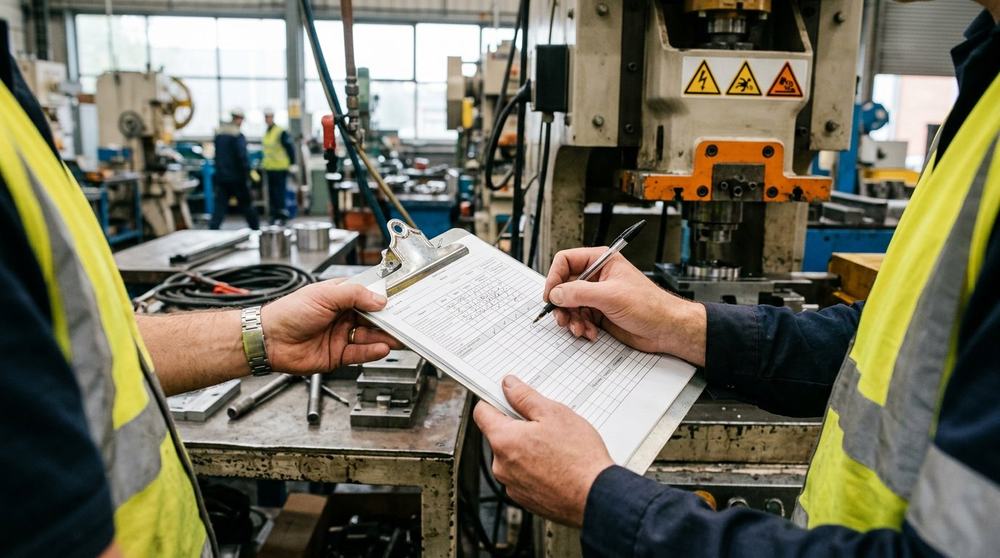
Free Work at Height Site Survey
The pre-task survey: access, work, environment, equipment, rescue, people — a fail is a stop, not a note.
Work the survey below: the access, the work, the environment, the equipment, the rescue and the people — each item pass, fail or N/A, and the tool scores it and writes the verdict. A fail is the stop: the work at height does not start with a failed survey item, and the print is the record that it was checked.
How to use the tool
- Set the location, the date, the surveyor and the task — the survey header
- Work the access — the route up, the scaffold or the MEWP or the ladder, the transfer, the landing
- Work the work — the duration, the load, the task at the edge, the transfer of the load
- Work the environment — the weather, the wind, the ground, the overhead, the proximity
- Work the equipment, the rescue and the people — the certification, the inspection, the plan, the kit, the trained and the fit — then print the survey; a fail is the stop, not a note
Worked example
The roofline re-sheeting, 9 m. Access — the MEWP (the cert current, the pre-use done, the route across the car park marked), pass. Work — the 4-hour task at the edge, the load the sheet and the fixings carried, the transfer the MEWPs, pass. Environment — the forecast the wind 12 m/s at midday against the MEWPs 10 m/s working limit: fail — the task is re-sequenced to the morning, the wind limit in the method. Equipment — the harness (within 5 years, the inspection this month), the lanyard (the self-retracting, the anchor the MEWPs point), pass. Rescue — the plan the MEWPs platform rescue (the winch down), the drill the last quarter, the local emergency the alarm and the 5-minute response, pass. People — the two operatives, the MEWP trained, the harness fit-checked, the fit confirmed, pass. The survey: one fail (the wind), the action (the re-sequence), the print filed, the work starts at 06:30 in the calm. The survey is the document that moved the task a day, and the fall that did not happen is the one the survey is for.
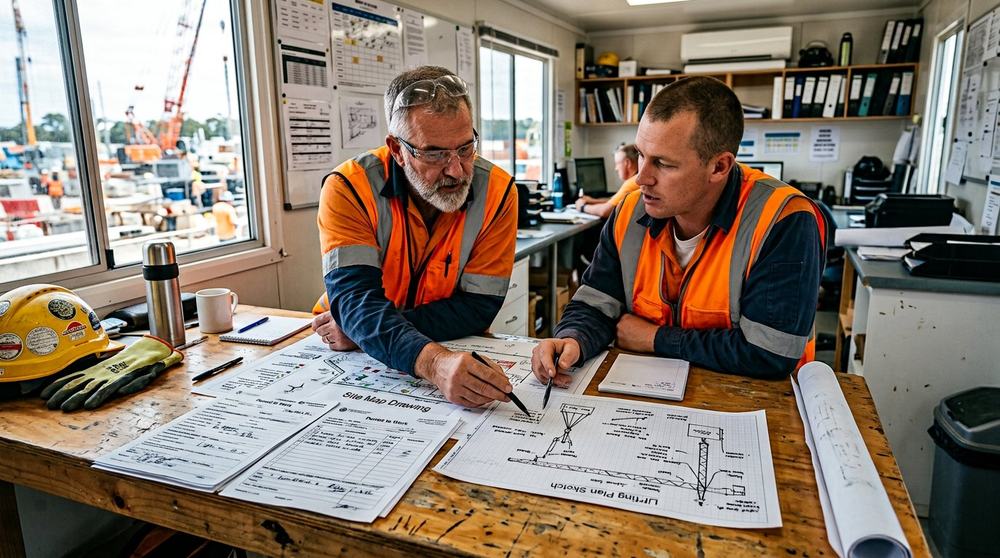
Standard & legal context
The UK Work at Height Regulations 2005 set the duty — the planning, the selection of the equipment, the inspection, the securing, and the rescue (the 2005 regulations added the explicit rescue duty that the earlier practice implied). The HSE Working at Height guidance and the IOSH and NEBOSH working-at-height units teach the survey method. The US pair is the OSHA 1926 Subpart M (the fall protection) and the 1910.28, with the rescue the named requirement. The survey below is the UK structure with the international columns; the equipment standards (the scaffold, the MEWP, the harness) are the EN and the ANSI families.
Common mistakes
- The certificate as the survey — the tested equipment is not the right equipment for this task at this place; the survey is the task-level check, and the certificate is the equipment-level record it draws on
- No rescue plan, or the we-will-get-the-fire-brigade plan — the rescue is the plan, the kit and the drill at the point; the fall is the one second, and the rescue is the minutes after, and the plan is the difference
- The weather as a note — the wind limit is the MEWPs number, and the forecast against the limit is the go or the re-sequence; the survey writes it
- The survey done and not acted on — the fail that is noted and worked around is the fail that is the incident; the stop is the surveys power, and the print is the evidence of the stop
Need the sign-off, not just the tool?
The tool is the preparation; the sign-off is the professional. For the statutory assessments, the audits, the ISO 45001 implementation and the training that comes with them, ask Muhammad Umer — 8+ years across Iraq, KSA and Pakistan, and the programme runs through umer-hse.pro. One message gets the written scope.
Common questions
Work at Height Survey — answered
What is a work at height survey?
The pre-task survey of the work at height: the access, the equipment, the anchor, the weather, the rescue and the people — the check that the task is set up to be done safely before the person is up. It is the task-level document; the certificates are the equipment-level records it draws on.
When is a survey required?
Before the work at height starts — the pre-task check is the standard, and the re-survey on the change (the weather, the equipment, the method, the day). The UK Work at Height Regulations 2005 require the planning and the inspection; the survey is the pre-task form of both.
What is the work at height rescue plan?
The plan for the fall that is arrested but not recovered: the retrieval (the winch, the platform, the ladder), the breathing and the medical, the communication, and the response time. The 2005 regulations added the explicit rescue duty; the plan is drilled, and the drill is the evidence.
What is the wind limit for the MEWP?
The manufacturers working wind speed — the number in the MEWPs manual, commonly 10–12 m/s for the standard boom, lower for the extended. The forecast against the limit is the go or the re-sequence, and the survey records it.
Who does the work at height survey?
The competent person for the task — the supervisor, the HSE officer, the MEWP operator for the equipment part. The competence is the knowledge of the access, the equipment and the rescue; the survey is the document the competence is applied to, and the signature is the accountability.
Can I print the survey?
Yes — the Print button produces the survey: the header, the six sections with the marks, the fails with the actions, the verdict and the signature. It is the document the task starts from and the one the investigation opens when the fall happens.
Keep building
Related tools
Lifting Plan
Free lifting plan (LLOP) tool: the lift details, the automatic classification (basic, complex, special), the m
Inspections & ChecklistsPPE Inspection Checklist
Free PPE inspection checklist: hard hats, gloves, boots, eye and respiratory protection, harnesses and high-vi
Planning & PermitsEmergency Action Plan
Free emergency action plan template: the assembly points, the evacuation routes, the roles (the warden, the fi
THE HEALTH AND SAFETY is an education and knowledge network. The tools are free and open; the professional assessments and audits run through umer-hse.pro.
Safety disclaimer
These tools are practical guidance, built to the UK baseline with the US equivalents named on each page. They do not replace a competent person assessment for high-risk work, a statutory assessment, or the advice of your insurer. Where a document has legal force — the fire risk assessment, the COSHH register, the permit to work — the responsible person owns it. Use the tool as the preparation, and the competent person as the sign-off.