
Free HSE tool · Inspections & Checklists
PPE Inspection Checklist
PPE is the last line of the hierarchy — and the one that fails silently: the harness that held a fall and must not be used again, the respirator with the cracked seal, the boots with the sole peeling. The PPE inspection catches the silent failures, because PPE that is not inspected is not protection.
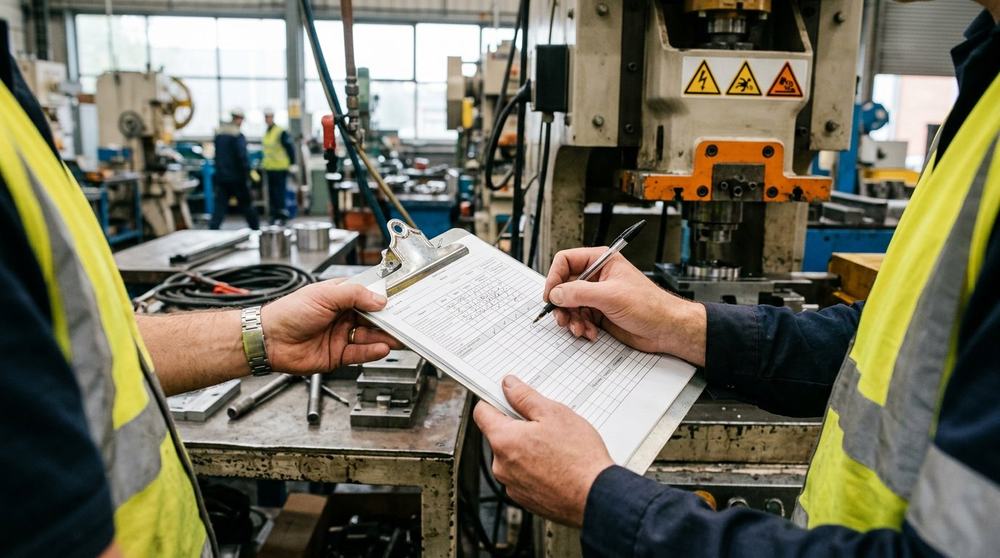
Free PPE Inspection Checklist
Condition, service life and storage per item — the fails go to the replacement list automatically. Post-incident PPE is retired, full stop.
| PPE item | Qty | Condition | Expiry / service date | Storage OK? | Action |
|---|
Service lives: hard hat — 5 years from manufacture, or after any severe impact · harness — 5-year inspection, retired after a fall · respirator cartridges — the change-out schedule, retired after a chemical exposure · full-face — retired after a chemical exposure · the date or the event, whichever comes first.
Work the checklist below: for each PPE item, the condition, the expiry or replacement date, the storage — pass or fail, and the fail goes to the replacement list. The expiry rules below are the ones that actually matter: the ones with a legal or manufacturer date, and the ones where a single fall or a single contamination is the end of the items life.
How to use the tool
- Set the site, the date, the inspector — the report header
- Inspect each PPE category in order — head, eye, hand, foot, respiratory, fall protection, high-vis
- Check condition against the failure signs — the checklist names them per item
- Check the dates — the manufacturers expiry, the post-incident retirement, the service interval
- Record the fails on the replacement list with owners and dates, and print the report — PPE that fails is removed from service, not re-inspected next month
Worked example
A 20-person workshop, PPE inspection. Head — 2 hard hats past the 5-year service life (replaced), 1 with a cracked shell (retired, the crack is the end of it). Eye — all pass. Hand — the welding gloves: 3 pairs with the inner lining exposed (replaced; the liner is the burn protection, and it is gone). Foot — 2 pairs of boots with the sole delaminating at the toe (replaced). Respiratory — the P100 cartridges: 2 sets past the change-out schedule (replaced), the full-face seals: 1 cracked (retired). Fall protection — the harnesses: 1 that caught a fall last quarter (already retired, confirmed), the rest within 5 years and inspected. 6 replacements, all on the list by end of day, the report printed and filed.

Standard & legal context
The UK PPE at Work Regulations 1992 require PPE to be maintained in an efficient state and efficient order — the inspection is the standard of maintenance, and the PPE must be replaced when it is damaged or has expired. The manufacturers service lives (the hard hats 5 years, the harnesses 5-year inspection, the cartridge change-out) are the binding dates. In the US, OSHA 1910.132 (general PPE), 1910.136 (head), 1910.138 (hands), ANSI Z87 (eye), 1910.100 (respiratory) set the equivalents, and a single fall retires a harness under 1910.140 practice. The dates below are the manufacturer and the standard, not a suggestion.
Common mistakes
- It looks fine — PPE is inspected against the failure signs, not the feeling; the crack, the delamination, the exposed liner are the fails
- Keeping the post-incident PPE — a harness that caught a fall is retired, full stop; the cartridge exposed to the release is retired, full stop
- One issue date for everyone — the service life runs from the date of first use or the date of issue, whichever is earlier, and the roster tracks it
- Storing PPE where it degrades — the harness in the sun, the respirator in the chemical store, the gloves on the bench by the welding: storage is part of the inspection
Need the sign-off, not just the tool?
The tool is the preparation; the sign-off is the professional. For the statutory assessments, the audits, the ISO 45001 implementation and the training that comes with them, ask Muhammad Umer — 8+ years across Iraq, KSA and Pakistan, and the programme runs through umer-hse.pro. One message gets the written scope.
Common questions
PPE Inspection Checklist — answered
What is a PPE inspection checklist?
The structured check of each PPE item — condition against the failure signs, the service or expiry date, and the storage — producing a pass/fail record and a replacement list. It is the maintenance evidence behind the PPE at Work duty.
How often should PPE be inspected?
Before each use by the wearer (the pre-use check), at the site level on a set interval (monthly on active sites, quarterly in stable workplaces), and at the service interval for the items that have one (the harness, the cartridge schedule).
When must PPE be replaced?
On the manufacturers service life, after a fall or a single severe event (a harness, a full-face after a chemical exposure), on the failure signs (crack, delamination, exposed liner), or when the inspection fails it. The date or the event, whichever comes first.
Who inspects the PPE?
The wearer before each use; the supervisor or the appointed person at the site interval; the competent person for the service-interval items. The duty is the employers (PPE at Work Regulations 1992, OSHA 1910.132); the inspection is how it is met.
What is the service life of a hard hat?
Five years from the date of manufacture for most shells (the date is moulded on the inside of the shell), and immediately after any severe impact — the impact is the end of the shells life regardless of the date.
Can I print the PPE inspection?
Yes — the Print button produces the full report: the per-category checklist with the marks, the fails with the failure signs, the replacement list with owners and dates, and the signature line.
Keep building
Related tools
Workplace Inspection Checklist
Free workplace safety inspection checklist: 30 items across fire, electrical, housekeeping, PPE, welfare and d
Inspections & ChecklistsElectrical Safety Inspection
Free electrical safety inspection tool: equipment and system checks, RCD and continuity testing, PAT record ta
Calculators & AssessmentsManual Handling Assessment
Free manual handling risk assessment: the NIOSH lifting equation calculator with your numbers, the TILE task c
THE HEALTH AND SAFETY is an education and knowledge network. The tools are free and open; the professional assessments and audits run through umer-hse.pro.
Safety disclaimer
These tools are practical guidance, built to the UK baseline with the US equivalents named on each page. They do not replace a competent person assessment for high-risk work, a statutory assessment, or the advice of your insurer. Where a document has legal force — the fire risk assessment, the COSHH register, the permit to work — the responsible person owns it. Use the tool as the preparation, and the competent person as the sign-off.