
Article · Oil & Gas · 19 August 2026
H2S Awareness: The Gas That Kills Fast, and the Basics That Stop It
Hydrogen sulphide is the gas that kills fast, and the awareness is the basics that stop it. The properties, the effects at each concentration, the detection, the PPE, the escape, and the entry rule — the awareness that is the difference between the shift that goes home and the one that does not. This article is the H2S awareness in working form: the gas, the effect, the detection, the protection, the escape, and the 100 ppm rule.
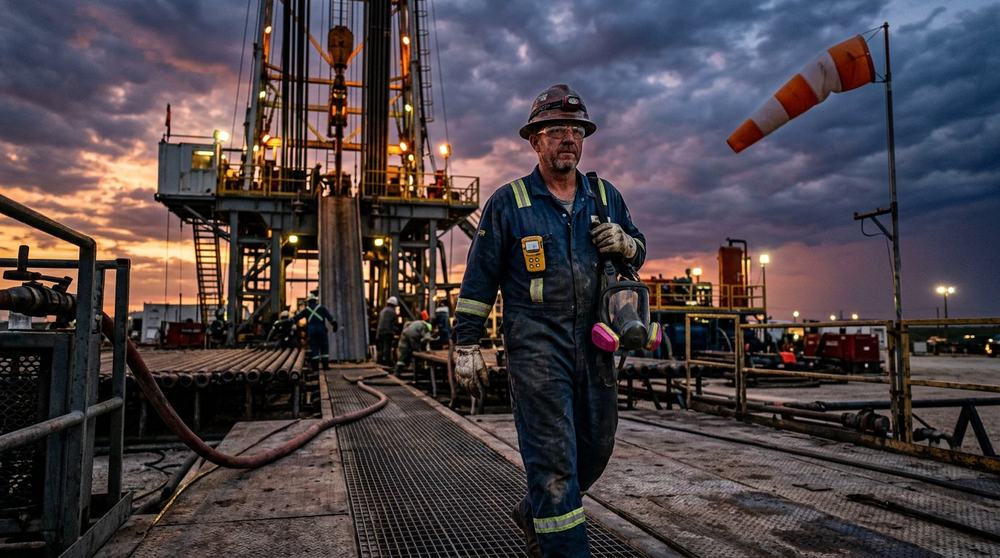
The gas: the properties that make it the risk
Hydrogen sulphide (H2S) is the toxic gas of the oil and gas, the sewer, the manure, and the anaerobic environment. The properties are the risk: the colourless (the gas that is not seen), the smell (the rotten egg, the one that fatigues the nose at the 100 to 200 ppm — the smell that is the warning, and the warning that goes), the heavier-than-air (the pool at the low point), the flammable (the 4 to 44 percent), and the toxic (the kill at the 500 ppm).
The properties are the reason the sense is not the detection: the smell goes, and the gas is still there. The awareness is the basics that hold the properties in the head — and the head is the one that makes the decision.
The effect: the concentration and the harm
The effect is the concentration, and the concentration is the harm. The 10 ppm is the warning — the smell, the eye irritation, and the signal that the gas is there. The 50 ppm is the limit — the ceiling, the action, the stop and the ventilate. The 100 ppm is the entry rule — the IDLH, the SCBA, and the no-entry without it. The 500 ppm is the kill — the minutes, and the collapse.
The concentration is the line: the 10 the warn, the 50 the act, the 100 the entry, the 500 the kill. The awareness is the four lines in the head, and the four lines are the decision before the gas is the decision.
The detection: the instrument, the badge, the sense
The detection is the instrument, the badge, and the sense. The instrument is the H2S detector — the fixed, the portable, and the continuous — the alarm at the 10 ppm and the 50 ppm. The instrument is the sight, and the sight is the warning.
The badge is the colour-change badge — the exposure over the shift, and the reading after. The sense is the last line, and the last line is the not-trusted one: the nose fatigues at the 100 to 200 ppm, and the smell that is the warning is the one that goes. The detection is the instrument first — and the instrument is the warning that holds when the sense goes.
The protection: the PPE, the SCBA, the escape-only
The protection is the PPE, the SCBA, and the escape-only. The PPE is the low: the glove, the suit, the skin, and the splash — the protection against the liquid and the low concentration. The PPE is the line, and the line is the low.
The SCBA is the high: the Self-Contained Breathing Apparatus — the 100 ppm, the entry, and the work. The SCBA is the line, and the line is the breath that is the clean. The escape-only air pack (the EEBD) is the exit: the short-duration, the escape route, and the not-for-entry. The protection is the three lines, and the three lines are the concentration that is the matched.
The escape: the route, the drill, the no-hero
The escape is the route, the drill, and the no-hero. The route is the upwind, the away from the pool, and the marked. The route is the line, and the line is the escape. The drill is the practice: the alarm, the route, and the assembly. The drill is the muscle, and the muscle is the response.
The no-hero is the rule: the one who stops to help is the one who is the second casualty, without the SCBA and the plan. The escape that is the drilled is the escape that is the home — and the home is the shift that goes home.
The 100 ppm rule, and the entry
The 100 ppm rule is the entry, and the entry is the rule. The 100 ppm is the IDLH — the Immediately Dangerous to Life or Health — and the IDLH is the no-entry without the SCBA. The entry at the 100 ppm is the entry that is the SCBA, and the SCBA is the protection that is the life.
The entry rule is the line: the below the 100 ppm is the instrument and the time-limited, and the at or above the 100 ppm is the SCBA. The rule is the one the awareness holds, and the one the interview asks — the 100 ppm is the IDLH, and the IDLH is the SCBA.
For What Purpose Do You Wear an Escape-Only Air Pack in H2S?
The escape-only air pack (the EEBD) has one purpose: to exit the toxic atmosphere. It is not for entry, not for working in the gas, and not for the rescue — the rescue is the SCBA and the team drill. The escape-only pack is the short-duration self-contained unit, the one that carries the person out of the zone on the escape route, and the field rule is the simple one: the pack is worn for the escape, the route is the one that was walked in the drill, and the person who enters the gas on the escape-only pack is the person who did not take the SCBA. The 100 ppm line is the one that decides the breathing air: above it, the SCBA; the escape-only is the exit, and it is the exit only.
Need the sign-off, not just the article?
The article is the preparation; the sign-off is the professional. For the statutory assessments, the audits, the ISO 45001 implementation and the training that comes with them, ask Muhammad Umer — 8+ years across Iraq, KSA and Pakistan, and the programme runs through umer-hse.pro. One message gets the written scope.
Common questions
H2S Awareness — answered
What is H2S and why is it dangerous?
Hydrogen sulphide (H2S) is the toxic, flammable gas of the oil and gas, the sewer, and the anaerobic environment. It is dangerous because it is the colourless (the sight that is not there), the smell that fatigues at the 100 to 200 ppm (the warning that goes), the heavier-than-air (the pool at the low point), and the toxic (the kill at the 500 ppm, the IDLH at the 100 ppm).
What is the H2S entry limit?
The 100 ppm is the IDLH — the Immediately Dangerous to Life or Health. At or above the 100 ppm, the entry is the no-entry without the SCBA. The 50 ppm is the ceiling limit (the action, the stop and the ventilate), and the 10 ppm is the warning level. The entry limit is the line: the below is the instrument and the time-limited, and the at-or-above is the SCBA.
For what purpose may you wear an escape-only air pack in the presence of H2S?
The escape-only air pack (the EEBD) has one purpose: to exit the toxic atmosphere. It is not for entry, not for working in the gas, and not for the rescue — the rescue is the SCBA and the team drill. The escape-only pack is the short-duration self-contained unit that carries the person out of the zone on the escape route, and the route is the upwind one.
What is the difference between H2S and hydrogen sulphide?
There is no difference — H2S is the chemical formula for hydrogen sulphide, the same gas. The H2S is the working name on the site, and the hydrogen sulphide is the name on the label. The awareness is the one, and the one is the gas that is the colourless, the rotten-egg smell, and the heavier-than-air.
How do you detect H2S?
The instrument first: the fixed detector at the point of the risk (the low point, the sump, the confined space entry), the portable detector at the worker, and the colour-change badge for the exposure. The sense is the last line, and the last line is the not-trusted one — the nose fatigues at the 100 to 200 ppm, and the smell that is the warning is the one that goes.
What PPE do you need for H2S work?
The three lines by the concentration: the low is the PPE (the glove, the suit, the skin, the splash), the high is the SCBA (the Self-Contained Breathing Apparatus, the 100 ppm and above), and the exit is the escape-only air pack (the EEBD, the not-for-entry). The SCBA is the entry at the IDLH, and the entry is the no-entry without it.
What is the H2S smell like, and can you trust it?
The rotten egg, at the low concentration. But the nose fatigues at the 100 to 200 ppm, and the smell that is the warning is the one that goes — the gas is still there, and the nose says the clear. The smell is not the detection: the instrument is, and the instrument is the alarm at the 10 ppm and the 50 ppm.
Keep reading
Related articles
The H2S Contingency Plan: The Response Before the Alarm
The H2S contingency plan, in working form: the detection, the alarm, the evacuation, the rescue, the medical,
Workplace Safety · 19 August 2026COSHH Principles: The 5 Rules That Keep the Chemical Side Honest
The COSHH principles, in working form: identify the substance, assess the exposure, control in hierarchy order
Workplace Safety · 27 August 2026Toolbox Talk Examples: 10 Ready-to-Use Topics With the Structure
Toolbox talk examples that work: 10 ready-to-use topics
THE HEALTH AND SAFETY is an education and knowledge network. The articles are free and open; the professional assessments and the training run through umer-hse.pro.
Safety disclaimer
The articles on this blog are practical guidance, built to the UK baseline with the US equivalents named in the text. They do not replace a competent person assessment for high-risk work, a statutory assessment, or the advice of your insurer. Where a duty has legal force — the fire risk assessment, the risk assessment, the COSHH register — the responsible person owns it. Read the article as the preparation, and take the sign-off from the competent person.