
Article · Oil & Gas · 29 August 2026
The H2S Contingency Plan: The Response Before the Alarm
The H2S contingency plan is the response written before the alarm — the detection, the alarm, the evacuation, the rescue, the medical, and the recovery. The plan written after the alarm is the plan that is too late; the plan written before is the plan that is the response. This article is the contingency plan in working form: the five elements, the drill, and the review.
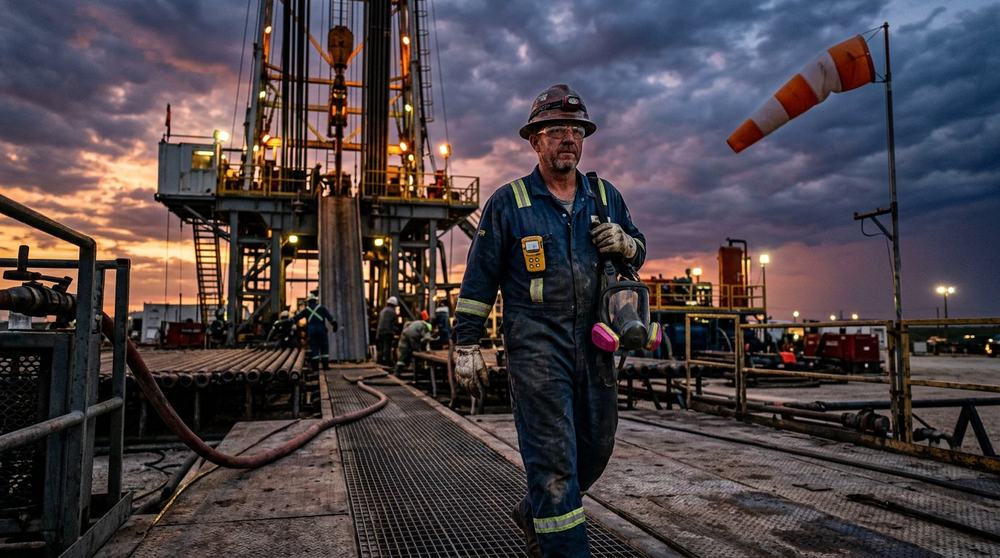
Why the plan is written before the alarm
The H2S contingency plan is the response, and the response is the plan. The gas at the 500 ppm is the kill in the minutes, and the minutes are the response — the detection, the alarm, the evacuation, the rescue. The plan that is the response is the plan written before the alarm, and the plan written before is the plan that is the written one.
The plan is not the document that is the shelf: the plan is the route, the role, and the decision, written while the site is the calm one. The alarm is the event, and the event is the one the plan was written for.
Element 1 — The detection and the alarm
The first element is the detection and the alarm. The detection is the line: the fixed H2S detector at the point of the risk (the low point, the sump, the confined space entry), the portable detector at the worker, and the badge at the exposure. The detection is the sight, and the sight is the warning.
The alarm is the signal: the audible, the visual, and the message. The alarm at the 10 ppm is the warning, and the alarm at the 50 ppm is the action — the stop and the evacuate. The detection and the alarm are the element, and the element is the first seconds of the response.
Element 2 — The evacuation and the muster
The second element is the evacuation and the muster. The evacuation is the route: the upwind, the away from the pool, the marked, and the assembly. The route is the line, and the line is the escape. The muster is the count: the assembly point, the headcount, and the missing. The muster is the line, and the line is the all-accounted-for.
The evacuation is the upwind rule — the H2S is the heavier-than-air, and the pool is the low point. The route that is the upwind is the route that is the breathable, and the breathable is the alive one.
Element 3 — The rescue, and the no-hero
The third element is the rescue, and the rescue is the no-hero. The rescue is the team, the SCBA, the equipment, and the trained. The rescue is the line, and the line is the team — the no-entry without the SCBA, and the no-rescue without the plan. The no-hero is the rule: the person who goes in is the trained one, and the trained one is the equipped one.
The H2S rescue is the SCBA rescue: the 100 ppm is the IDLH, and the IDLH is the no-entry without the breathing apparatus. The rescue that is the no-hero is the rescue that is the survivor — and the survivor is the team.
Element 4 — The medical and the EMS
The fourth element is the medical and the EMS. The medical is the first aid, the oxygen, and the decontamination. The medical is the line, and the line is the first responder — the first aider, the oxygen, and the decon. The EMS is the handover: the ambulance, the hospital, and the report.
The H2S exposure is the oxygen and the decon: the gas is the heavier-than-air, and the residue is the decontaminated one. The medical element is the minutes after the evacuation — and the minutes are the survival.
Element 5 — The recovery and the review
The fifth element is the recovery and the review. The recovery is the stand-down: the gas clear, the all-clear, and the return. The recovery is the line, and the line is the all-clear — the detection that is the clear, and the return to work. The review is the debrief: the what worked, the what failed, and the plan that is the updated.
The review is the element that makes the plan the alive one: the drill is the practice, and the review is the learning. The plan that is the reviewed is the plan that is the better one — and the better is the alive.
The drill and the review: the plan that is alive
The plan is the alive, and the alive is the drill and the review. The drill is the practice: the H2S drill, the evacuation, the muster, the rescue — the twice a year minimum, and the high-risk site more often. The drill is the muscle, and the muscle is the response.
The review is the after: the drill debrief, the event debrief, and the plan update. The plan that is the drilled and the reviewed is the plan that is the response — and the response is the one the alarm finds waiting.

Need the sign-off, not just the article?
The article is the preparation; the sign-off is the professional. For the statutory assessments, the audits, the ISO 45001 implementation and the training that comes with them, ask Muhammad Umer — 8+ years across Iraq, KSA and Pakistan, and the programme runs through umer-hse.pro. One message gets the written scope.
Common questions
The H2S Contingency Plan — answered
What is an H2S contingency plan?
The written response to the H2S emergency: the detection and the alarm, the evacuation and the muster, the rescue and the no-hero, the medical and the EMS, the recovery and the review. The plan is written before the alarm, drilled at the planned interval, and reviewed after each drill and each event.
What are the elements of an H2S emergency response?
The five: the detection and the alarm (the fixed, the portable, the badge; the 10 ppm warning, the 50 ppm action), the evacuation and the muster (the upwind route, the assembly, the headcount), the rescue (the team, the SCBA, the no-hero rule), the medical and the EMS (the first aid, the oxygen, the decon, the handover), and the recovery and the review (the gas clear, the all-clear, the debrief).
How often should the H2S drill be run?
Twice a year minimum, and the high-risk site (the confined space, the sewer, the anaerobic process) more often. The drill is the evacuation, the muster, and the rescue — and the review after each drill is the plan update. The drill is the muscle, and the muscle is the response.
What is the IDLH for H2S?
The 100 ppm — the Immediately Dangerous to Life or Health. At the 100 ppm, the entry is the no-entry without the SCBA, and the work is the no-work without the breathing apparatus. The 500 ppm is the kill in the minutes — the response is the evacuate, not the work-on.
Can you rescue someone in an H2S atmosphere without an SCBA?
No. The H2S rescue is the SCBA rescue: the no-entry without the breathing apparatus, and the no-rescue without the plan. The no-hero rule is the one that keeps the rescue the survivor — the trained team, the SCBA, and the plan. The hero without the SCBA is the second casualty.
What is the difference between the H2S alarm and the fire alarm?
The gas and the route. The fire alarm is the smoke and the heat, and the route is the away from the fire. The H2S alarm is the toxic gas, and the route is the upwind and the away from the low point — the H2S is the heavier-than-air, and the pool is the low point. The H2S alarm is the stop and the evacuate, and the evacuate is the upwind one.
Keep reading
Related articles
H2S Awareness: The Gas That Kills Fast, and the Basics That Stop It
Hydrogen sulphide (H2S) awareness basics: the properties, the effects at each concentration, the detection, th
Fire Safety · 19 August 2026Fire Risk Assessment: The Starting Point, and the Five Steps
How to do a fire risk assessment: the starting point, the five steps, the ignition source, the fuel, the oxyge
Workplace Safety · 19 August 2026Near Miss Reporting: Why the Almost-Incidents Are the Ones That Matter
Near miss reporting, explained: what a near miss is, why the almost-incidents are the leading indicator, how t
THE HEALTH AND SAFETY is an education and knowledge network. The articles are free and open; the professional assessments and the training run through umer-hse.pro.
Safety disclaimer
The articles on this blog are practical guidance, built to the UK baseline with the US equivalents named in the text. They do not replace a competent person assessment for high-risk work, a statutory assessment, or the advice of your insurer. Where a duty has legal force — the fire risk assessment, the risk assessment, the COSHH register — the responsible person owns it. Read the article as the preparation, and take the sign-off from the competent person.