
Free HSE tool · Risk Assessments
Fire Risk Assessment
The fire risk assessment (FRA) is the document the fire service, the insurer and the client ask for first — and the one where we have one stops being true the day the last review date passes. The UK Fire Precautions (Workplace) Regulations 1997 and the Regulatory Reform (Fire Safety) Order 2005 require it; the five-key-question structure below is the HSEs own method, used in the Gulf and across the common-law world with local regulation substituted.
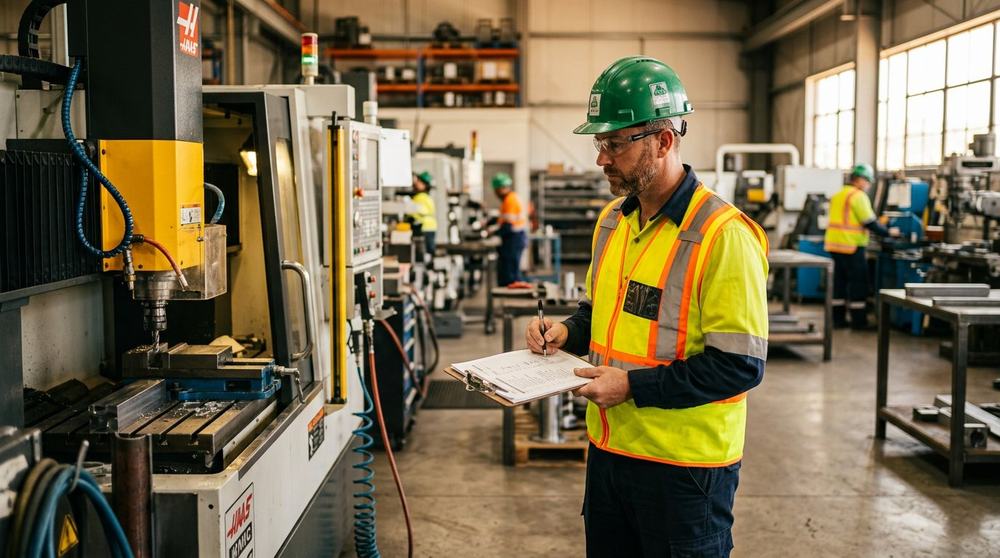
Free Fire Risk Assessment (5 Key Questions)
Work the five questions in the HSE order, record the actions, set the review — then print the signed FRA.
Q1 · Identify the fire hazards
Q2 · Identify the people at risk
Q3 · Evaluate & reduce the risk
Q4 · Record, plan & prepare
| Action | Owner | Due | Done |
|---|
Q5 · Review
Review this FRA at least annually, after any fire or false alarm, after any significant change of use or layout, and when the fire service recommends it.
Work through the form below: identify the fire hazards, the people at risk, evaluate the existing precautions, complete the five key questions, and print the record. It is designed to be done in one sitting for a normal workplace and to print as a signed document.
How to use the tool
- Identify the fire hazards — electrical, heating, cooking, flammable storage, processes, the usual six families
- Identify the people at risk — employees, visitors, the disabled, the lone worker, night staff — and the evacuation problem each group presents
- Evaluate the existing precautions — detection, alarm, extinguishers, escape routes, signage, the warden system — and name the gaps
- Complete the five key questions: how will fire be kept under control, how will people escape, how will the emergency services be informed, what will be done, and how will the assessment be recorded and reviewed
- Record the findings, assign owners and dates to the actions, set the review, and print — then actually brief the team on the escape routes
Worked example
A two-floor office block. Hazards — the server room (electrical load), the kitchenette (cooking), the archive (combustible storage). People — 30 staff, visitors, one wheelchair user on floor 2, night security. The five questions resolve: escape via two stairways; the wheelchair users refuge point outside the stair on floor 2; the warden system covering both floors; the kitchenette suppression and the server room gas system; the alarm to the security desk. Actions: replace the kitchenette single 2 kg extinguisher with a 6 kg unit and a wet-chemical unit, add the refuge sign, brief the night security on the alarm test. Three actions, one page, a fire service that finds nothing.
Standard & legal context
In the UK the duty sits in the Regulatory Reform (Fire Safety) Order 2005 for premises other than domestic and the Fire Precautions (Workplace) Regulations 1997 — the responsible person must carry out a suitable and sufficient FRA, record the significant findings, and review it. The HSE five-key-question method is set out in the HSE fire safety guidance. In the Gulf, the civil defence regulations carry the same structure; in the US, NFPA 101 and the OSHA general duty clause do. The form below is the HSE method with the international vocabulary.
Common mistakes
- Assessing the building and not the people — the FRA fails when it cannot answer how does the wheelchair user leave
- Checking the extinguishers and skipping the escape routes — detection and suppression are the support act; the route is the show
- Writing signage in place without walking the route in the dark — the FRA is a walkover document
- Letting the review date pass — the FRA is reviewed at the set interval and after any fire, alarm or change of use; a lapsed FRA is a legal finding on its own
Need the sign-off, not just the tool?
The tool is the preparation; the sign-off is the professional. For the statutory assessments, the audits, the ISO 45001 implementation and the training that comes with them, ask Muhammad Umer — 8+ years across Iraq, KSA and Pakistan, and the programme runs through umer-hse.pro. One message gets the written scope.
Common questions
Fire Risk Assessment — answered
What is a fire risk assessment?
An FRA is the documented assessment of the fire hazards in a workplace, the people at risk, the precautions in place, the gaps, and the actions to close them — required by law in the UK and the standard of care everywhere else.
What are the 5 key questions of a fire risk assessment?
In the HSE order: identify the fire hazards; identify the people at risk; evaluate and reduce the risk; record, plan and prepare; and review and update. The questions the form answers: how will fire be kept under control, how will people escape, how will the emergency services be informed, what will be done, and how will it be recorded and reviewed.
How often must a fire risk assessment be reviewed?
At least annually in most workplaces, after any fire or false alarm that changed the picture, after any significant change of use or layout, and when the fire service recommends it. High-risk premises add monthly checks on top of the annual FRA.
Who does the fire risk assessment?
The responsible person — normally the employer or the premises owner — personally or through a competent person, someone with the fire safety knowledge and experience to judge the premises. An IOSH fire qualification or the practical FRA course is the usual evidence.
Does this tool cover my premises?
The form below follows the five-key-question method and works for offices, workshops, warehouses and sites. For complex or high-risk premises — process, multi-occupancy, large assembly — the FRA is a professional job; this tool is the preparation, not the substitute.
What happens if I do not do a fire risk assessment?
In the UK the Fire Safety Order makes it a criminal offence, with unlimited fines and personal liability for the responsible person. Insurers void cover. And after any fire, the absence of an FRA is the first thing the investigation and the court look at.
Keep building
Related tools
General Risk Assessment
Free 5-step general risk assessment tool: identify hazards, who is harmed, score the risk, select controls and
Inspections & ChecklistsWorkplace Inspection Checklist
Free workplace safety inspection checklist: 30 items across fire, electrical, housekeeping, PPE, welfare and d
Planning & PermitsEmergency Action Plan
Free emergency action plan template: the assembly points, the evacuation routes, the roles (the warden, the fi
THE HEALTH AND SAFETY is an education and knowledge network. The tools are free and open; the professional assessments and audits run through umer-hse.pro.
Safety disclaimer
These tools are practical guidance, built to the UK baseline with the US equivalents named on each page. They do not replace a competent person assessment for high-risk work, a statutory assessment, or the advice of your insurer. Where a document has legal force — the fire risk assessment, the COSHH register, the permit to work — the responsible person owns it. Use the tool as the preparation, and the competent person as the sign-off.