
Free HSE template · Operations & Incident
Permit to Work Template
The permit to work template is the controlled authorisation for the high-risk task: the header, the controls per work type, the gas test, the sign-off, and the 20-point system audit. It is the document the investigation opens when the task goes wrong, and the evidence of the control that did, or did not, happen. The permit is the controlled interface between the task and the system, and the template is the document that makes the interface a record.
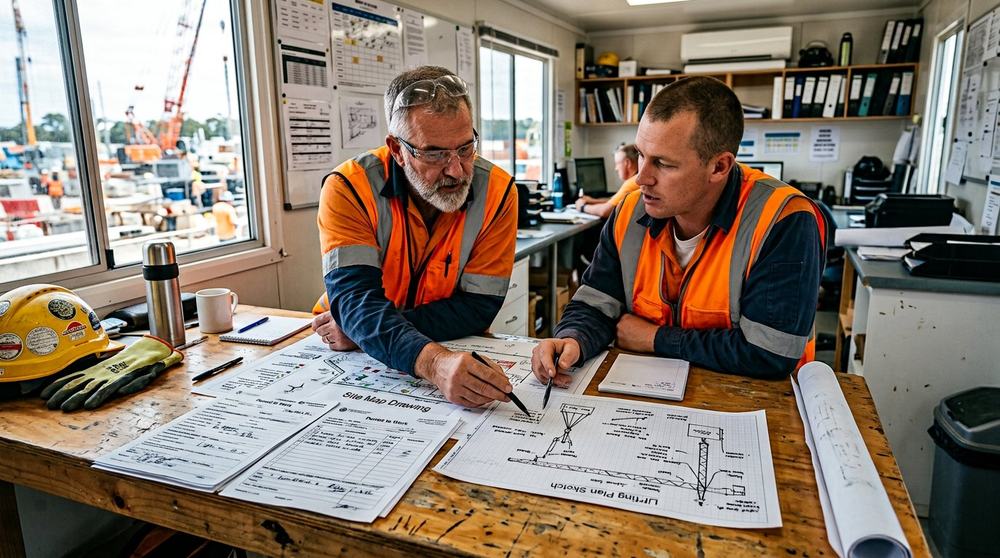
Permit-to-Work Template — the controls for the work type
Pick the work type and the control list changes: the gas check for the confined space, the fire watch for the hot work. The 20-point audit scores the permit on issue.
Controls for this work type
Gas check (confined space / hot work)
| Gas | Reading | Limit | Within limit? |
|---|---|---|---|
| O2 | 19.5–23.5% | ||
| LEL (flam.) | < 10% | ||
| CO | < 30 ppm | ||
| H2S | < 10 ppm |
Permit audit — 20 points on issue
Work through it per task: the work type, the header, the controls for the type, the gas test where the type is the confined space or the hot work, the sign-off, and the system audit. The work type is the point, because the controls are per type, and the template carries the controls for the hot, the confined, the electrical, the height, and the cold work. Print it for the task, sign it, post it at the location, and file it. The 20-point audit is the check that the permit system itself is working, and the template carries it, because the permit is only as good as the system around it.
How to use the template
- Select the work type — the hot, the confined, the electrical, the height, the cold
- Set the header — the permit number, the area, the issuer, the receiver, the time
- Work the controls for the type — the isolation, the gas test, the emergency
- Issue the permit — the issuer signs, the receiver signs, the permit is posted and logged
- Close the permit — the work complete, the area checked, the permit cancelled and returned
- Run the 20-point system audit at the interval, and file the permit and the audit
Worked example
A permit to work for the tank cleaning: the type the confined space, the header the permit number, the area the day tank, the issuer the shift supervisor, the receiver the cleaning foreman, the time the one shift; the controls the isolation blinded and locked, the gas test O2 20.8, LEL 0, CO 3, H2S 2 all pass, the attendant posted, the rescue the tripod and the BA; the sign-off the issuer and the receiver; the close the work complete, the area checked, the permit cancelled. The permit in the file, the audit at the interval, and the system is the record that the permit means something.

Standard & legal context
The permit to work is the standard high-risk control in the UK, the HSE process safety practice and the HSG100, and the OSHA process safety standard 1910.119 and the HAZWOPER 1910.120 in the US. The ISO 45001:2018 clause 8.1.3 and the management of change carry the duty at the management system level. The 20-point system audit is the check that the permit system is working, and the template carries it, because the permit is the interface, and the system is the audit.
Common mistakes
- The rubber stamp — the permit signed at the office without the area check is the document the investigation quotes back
- The extension by the tick — the permit is valid for the shift, and the extension is the re-issue with the re-test, not the line added
- The gas test once — the confined space is tested before and during, and the single test is the one that misses the drift
- No system audit — the permit is the interface, and the system is the audit, and the permit without the audit is the one that becomes the rubber stamp
Need the sign-off, not just the template?
The template is the preparation; the sign-off is the professional. For the statutory assessments, the audits, the ISO 45001 implementation and the training that comes with them, ask Muhammad Umer — 8+ years across Iraq, KSA and Pakistan, and the programme runs through umer-hse.pro. One message gets the written scope.
Common questions
Permit to Work Template — answered
What is a permit to work template?
The controlled authorisation for the high-risk task: the header, the controls per work type, the gas test, the sign-off, and the 20-point system audit. It is the document the investigation opens, and the evidence of the control that did, or did not, happen.
What work types does the PTW template cover?
The five standard types: the hot work, the confined space, the electrical isolated work, the working at height, and the general or cold work. The controls are per type, and the template carries the controls for each, with the gas test for the confined and the hot.
Is the permit to work template free?
Yes — print as many as you need, fill them in, sign them, and file them. Nothing is uploaded and there is no account. The template is the standard HSE document, and it is ready to use with the system audit.
Does the template include the gas test?
Yes — the gas test is a section for the confined space and the hot work, with the limits for the O2, the LEL, the CO and the H2S. The test is the live check, and the template carries the limits and the pass and fail.
What is the 20-point system audit?
The check that the permit system itself is working: the procedure, the triggers, the training, the log, the review, and the KPI. The permit is the interface, and the system is the audit, and the 20 points are the document the system review and the client audit work from.
Can I print or export it?
Yes — Print / Save as PDF gives the permit and the audit as a dated document, and Export CSV gives the permits issued and the audit points for your PTW system. The completed permit is the document at the location, and the audit is the one in the file.
Keep building
Related templates
Confined Space Checklist
Working HSE tool from the toolkit
Operations & IncidentSSOW Template
Free SSOW template (Statement of Safety of Work): the safety statement for the contractor or the task, the sco
Toolkit toolIncident Report
Working HSE tool from the toolkit
THE HEALTH AND SAFETY is an education and knowledge network. The templates are free and open; the professional assessments and audits run through umer-hse.pro.
Safety disclaimer
These templates are practical documents, built to the UK baseline with the US equivalents named on each page. They do not replace a competent person assessment for high-risk work, a statutory assessment, or the advice of your insurer. Where a document has legal force — the fire risk assessment, the COSHH register, the permit to work — the responsible person owns it. Use the template as the preparation, and the competent person as the sign-off.