
Practical Skills course
Practical Risk Assessment
The practical risk assessment skills course: how to walk a real workplace, identify the hazards, assess the risk, select the controls and manage the assessment over time — the hands-on risk assessment credential.
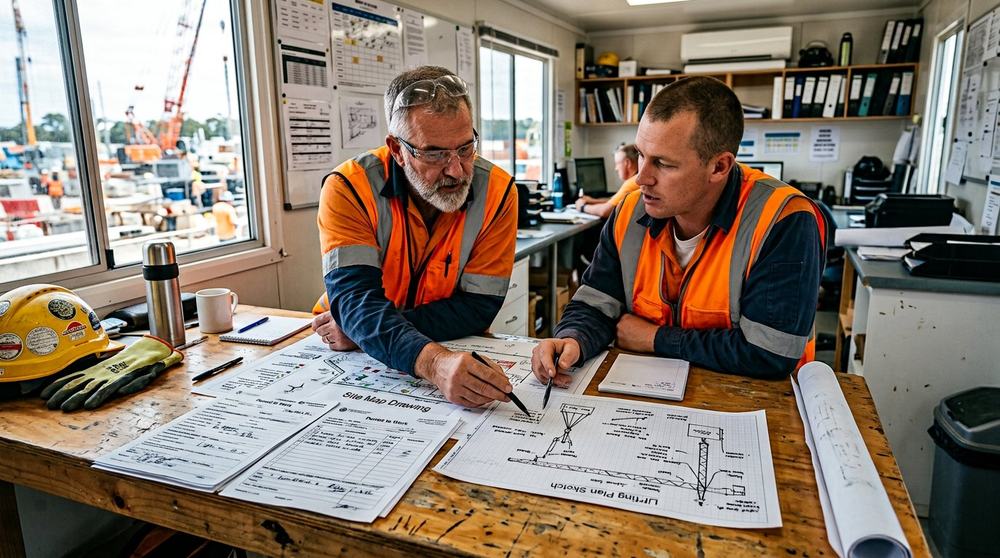
Who this course is for
- HSE and safety staff who will sign risk assessments
- Supervisors who must own the risk assessment for their area
- New HSE professionals who need the practical skill, not just the theory
- Anyone preparing for IOSH Managing Safely or the NEBOSH route who wants the hands-on base
The syllabus — what you’ll actually cover
| Module | What it covers |
|---|---|
| The duty | The duty to assess risk; suitable and sufficient; the frequency; the review triggers This module is the baseline the rest of the drill assumes — build it properly. |
| The walkover | The structured walkover method; the hazard families; the who-might-be-harmed step; the existing controls The applied module: the technique is simple until the drill puts it under time and pressure. |
| The assessment | Scoring likelihood and consequence; the risk matrix; selecting the controls in the hierarchy; the residual risk The practical core — the module that separates workers who do the work from workers who describe it. |
| Writing the assessment | The format; the findings; the actions with owner and date; making it usable, not just compliant Keep this module automatic until the assessment day; it is the area with the most direct marks. |
| Managing the assessment | The review triggers; the incident and near-miss learning; the drill results; the audit trail; the communication to the team The closing module ties the skill to the emergency — bring your site examples here and the drill becomes familiar. |

The exam & assessment
Practical assessment: you complete a risk assessment on a real (or simulated) workplace and present your findings. Marked on method, completeness and the action plan.
Duration & delivery
One intensive day (or a two-week part-time block) including a practical walkover and a written assessment through the official programme.
How to prepare — the tips that actually work
- Do a full walkover of a workplace you know before the course — it sharpens your eye instantly
- Keep a findings template you can fill in under pressure; the assessment is timed
- Practise the hierarchy of controls in order: elimination before PPE, always
- Write the action plan as the owner would read it: who, what, by when
Where this takes your career
The practical risk assessment is where safety credibility is made — it is the document everyone signs and everything else builds on. This course is the hands-on credential that turns risk assessment theory into a signed, managed document.
What you’ll be able to do
- Do the practical work safely, with the technique trained and drilled
- Pass the practical assessment with the standard the course requires
- Hold the credential your site, permit or tender lists for this task
- Work the interface — the permit, the team, the handover — the way the real work runs
- Respond correctly under pressure, when the drill becomes the emergency
What the course actually looks like
The course runs through the official programme in the standard duration for this practical, with the drill and the assessment on the real equipment. You get the sequence trained until it is automatic, the assessment standard demonstrated, and the certificate on passing. Schedules and fees are published on the official website — one message gets you the written quote.
How employers see this qualification
On the site, the practical credential is the line that gets you on the task. The permit lists it, the tender lists it, and the supervisor checks it before the work starts. A trained and credentialed worker is the worker the site plan is built around — and the one the investigation credits when something goes right.
Common mistakes candidates make
- Treating the practical as a formality — the assessment is timed and on the real equipment
- Skipping the pre-use inspection sequence; it is the first thing assessed and the first thing that saves you
- Practising alone instead of with the team communication the work actually needs
- Letting the credential lapse without the refresher the employer or permit expects
How this fits with the other qualifications
On the practical skills range, Practical Risk Assessment sits alongside the others like this:
- IOSH Managing Safely (IOSH) — IOSH Managing Safely 2026 — Exam Format, Pass Mark & What It Gets You
- COSHH Chemical Safety (Practical Skills) — COSHH & Chemical Safety — Assessment, Controls & The Register
The official programme will map the right sequence for your goals — one conversation on WhatsApp saves months of guessing.
Before you enrol — confirm these five things
- The exact syllabus version the awarding body is running right now — and that it matches the batch you are booking
- The assessment format in writing: open-book or closed-book, the duration, the pass mark, and how many sittings per year
- The total fee in your currency, what it includes (materials, exam entry, certificate) and the refund position
- The delivery language and whether the classes are in person, virtual or self-paced with a live exam
- Your exam slot and the validity window, so the qualification lands when your role or tender actually needs it
Fees, dates & enrolment
Course information on this page is educational. Batch schedules, fees and enrolment run through the official programme — one conversation gets you a written quote, the exam slot and the study plan.
Common questions
Practical Risk Assessment — answered
What is the practical risk assessment course?
A hands-on course where you complete a real risk assessment — walkover, hazard identification, scoring, controls, action plan — rather than only studying the five-step theory.
How long does the practical risk assessment course take?
One intensive day, or a two-week part-time block, including the practical walkover and the written assessment.
Who should take the practical risk assessment course?
HSE and safety staff who will sign risk assessments, supervisors who must own the assessment for their area, and new HSE professionals who need the practical skill.
Does this prepare me for IOSH Managing Safely?
Yes — the practical risk assessment is a core part of the Managing Safely syllabus. Taking this course first makes the Managing Safely case study significantly easier.
How do I book this course and what does it cost?
Batch schedules and fees depend on country, group size and delivery mode. Message the official programme on WhatsApp or through umer-hse.pro — you get a written quote with the exam slot and the study plan.
Keep building
Related courses
IOSH Managing Safely
IOSH Managing Safely 2026
Practical SkillsCOSHH Chemical Safety
COSHH & Chemical Safety
THE HEALTH AND SAFETY is an education and knowledge network, not an awarding body. Qualifications are issued by the awarding organisations, and enrolment runs through the official programme.
Safety disclaimer
Course information is for guidance and planning. Syllabus, assessment and certification requirements are set by the awarding body and can change — always confirm the current requirements with the awarding body or the official programme before enrolment.